

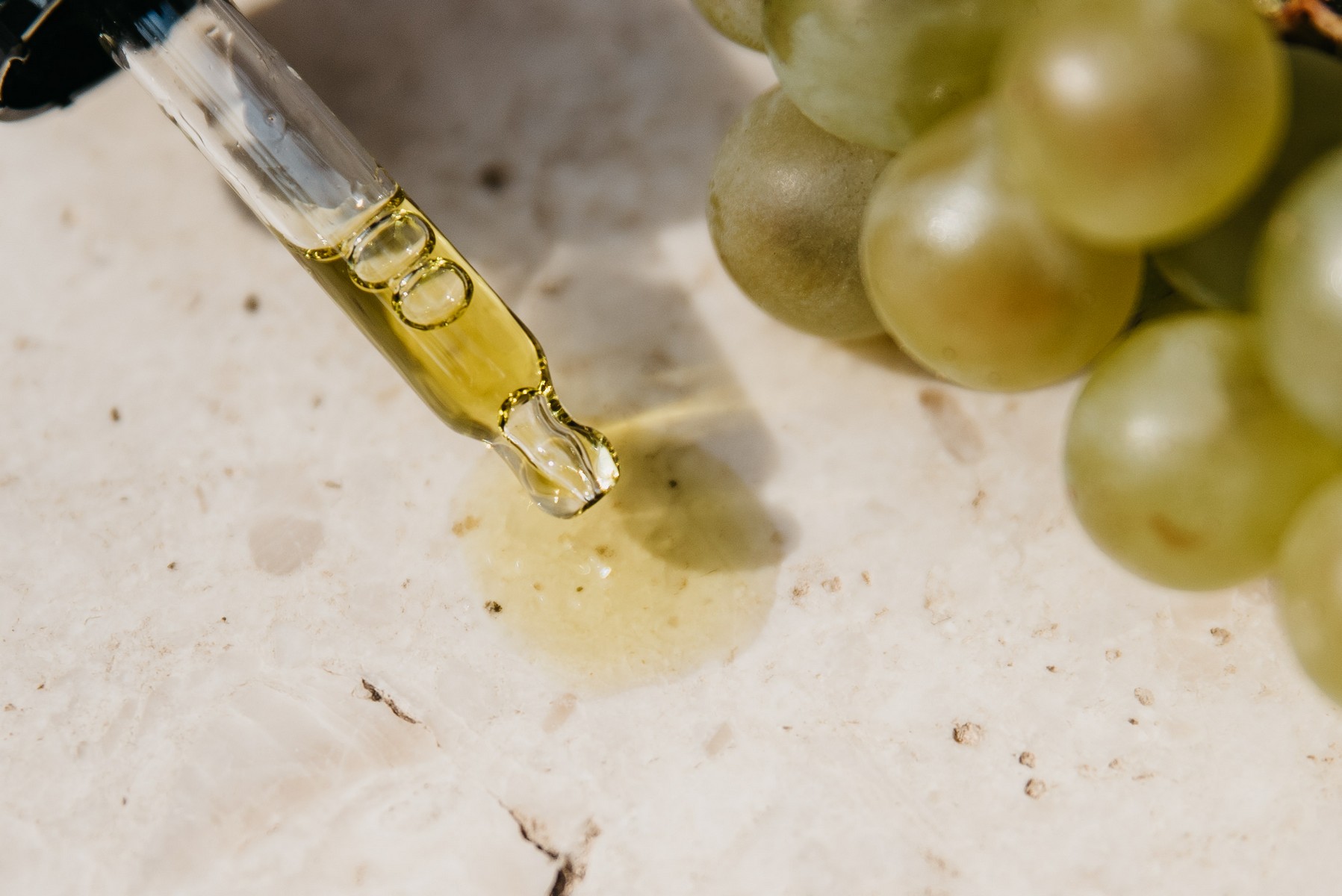
An oil rich in phenolic compounds, free fatty acids, and vitamins, and an excellent antioxidant.
Grapeseed oil is light, non-greasy, and quickly absorbed. It is rich in linoleic acid (ω-6), phytosterols, and vitamin E, which give it moisturizing, regenerative, and antioxidant properties¹.
Studies have shown that grapeseed oil helps strengthen the skin barrier, reduce transepidermal water loss, and soothe inflammation². Its strong antioxidant activity, particularly due to oligomeric proanthocyanidins (OPCs), protects the skin from oxidative stress and slows down the aging process³.
Thanks to its light texture and non-comedogenic properties, grapeseed oil is often used to regulate sebum production, reduce the appearance of acne, and promote a balanced, healthy complexion⁴. With regular use, the skin becomes softer, more elastic, and more resilient to external stressors⁵.
A fast-absorbing, lightweight, and non-irritating oil.
Antioxidant properties

Hydration

Softness